
The insurance industry forms the backbone of financial security for millions of individuals and businesses worldwide. Whether you’re a business owner evaluating coverage options or a professional entering the insurance sector, understanding the different types of insurance companies is crucial for making informed decisions.
What Are Insurance Companies and Why Do They Matter?
Insurance companies are financial institutions that provide protection against financial loss through risk transfer. They collect premiums from policyholders and use these funds to pay claims when covered events occur. This system creates a safety net that enables individuals and businesses to operate with confidence, knowing they’re protected against unforeseen circumstances.
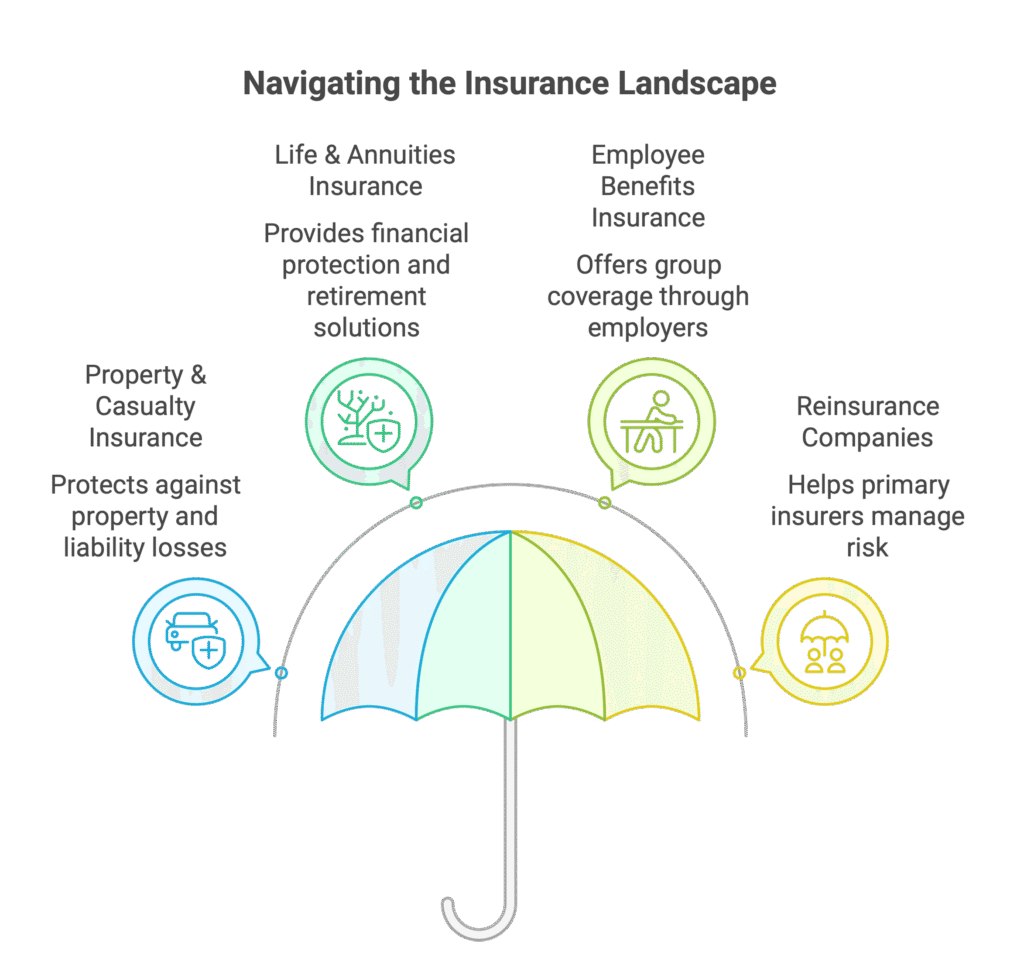
The Four Primary Types of Insurance Companies
1. Property & Casualty Insurance Companies
Property & Casualty (P&C) insurers protect against losses to property and liability claims. These companies typically operate in two main segments:
Personal Lines:
Homeowners insurance
Auto insurance
Renters insurance
Personal umbrella policies
Coverage for recreational vehicles, boats, and valuable items
Commercial Lines:
General liability insurance
Commercial property insurance
Workers’ compensation
Professional liability coverage
Cyber liability insurance
P&C companies face unique challenges, including catastrophic events like hurricanes and wildfires that can generate massive claim volumes. They must maintain substantial reserves and often purchase reinsurance to manage these risks effectively.
2. Life & Annuities Insurance Companies
Life insurance companies provide financial protection for beneficiaries and retirement planning solutions. Their primary products include:
Life Insurance Products:
Term life insurance (temporary coverage)
Whole life insurance (permanent coverage with cash value)
Universal life insurance (flexible premiums and death benefits)
Variable life insurance (investment-linked policies)
Annuity Products:
Immediate annuities (start payments right away)
Deferred annuities (payments begin at a future date)
Fixed annuities (guaranteed returns)
Variable annuities (market-linked returns)
Life insurers typically have longer investment horizons than P&C companies, allowing them to invest in assets that may take decades to mature.
3. Employee Benefits Insurance Companies
Employee benefits insurers specialize in group coverage provided through employers. This sector has experienced significant growth as companies compete for talent by offering comprehensive benefits packages.
Common Employee Benefits:
Group health insurance (medical, dental, vision)
Disability insurance (short-term and long-term)
Group life insurance
Voluntary benefits (critical illness, accident insurance)
Wellness programs and telemedicine services
These companies must navigate complex regulations, including the Affordable Care Act in the United States and similar healthcare mandates globally.
4. Reinsurance Companies
Reinsurance companies provide “insurance for insurance companies.” They help primary insurers manage risk by taking on portions of their exposure. This system is essential for industry stability and enables insurers to write larger policies than they could handle independently.
Types of Reinsurance:
Treaty reinsurance (covers entire books of business)
Facultative reinsurance (covers individual risks)
Catastrophe reinsurance (protects against major disasters)
Life reinsurance (supports life insurance operations)
Insurance Company Ownership Structures
Understanding ownership structure is crucial when evaluating insurance companies:
Stock Insurance Companies
Owned by shareholders
Profits distributed as dividends to shareholders
Decision-making driven by shareholder value
Examples: Most publicly traded insurers
Mutual Insurance Companies
Owned by policyholders
Profits may be returned to policyholders as dividends
Decision-making focused on policyholder interests
Examples: Many regional and specialty insurers
Essential Business Units in Insurance Companies
Regardless of type, all insurance companies share similar organizational structures:
Customer-Facing Departments
Sales and Marketing
Product development and positioning
Channel management (agents, brokers, direct sales)
Digital marketing and customer acquisition
Brand management and advertising
Underwriting
Risk assessment and pricing
Policy terms and conditions
Portfolio management
Regulatory compliance
Claims Management
Claims processing and investigation
Loss adjustment and settlement
Fraud detection and prevention
Customer communication throughout the claims process
Customer Service
Policy administration and changes
Billing and payment support
Coverage questions and explanations
Retention and renewal activities
Supporting Operations
Actuarial Department
Statistical analysis and modeling
Pricing strategy and profitability analysis
Reserve calculations
Risk management and capital allocation
Finance and Accounting
Financial reporting and analysis
Investment management
Regulatory financial filings
Budget planning and cost management
Information Technology
Digital transformation initiatives
System integration and data management
Cybersecurity and privacy protection
Innovation and emerging technology adoption
Regulatory Environment and Compliance
Insurance regulation varies significantly by jurisdiction but generally focuses on:
Licensing Requirements
Company licensing and financial requirements
Agent and broker certification
Continuing education mandates
Market conduct examinations
Financial Solvency Protection
Capital requirements and stress testing
Regular financial examinations
Investment restrictions and guidelines
Guarantee fund participation
Consumer Protection
Policy standardization requirements
Fair claims handling practices
Privacy and data security standards
Complaint handling procedures
Market Conduct
Anti-discrimination regulations
Fair pricing practices
Marketing and advertising standards
Competition and antitrust compliance
Current Industry Trends and Challenges
Digital Transformation
Insurance companies are investing heavily in technology to improve customer experience, streamline operations, and reduce costs. Key areas include:
Artificial intelligence for underwriting and claims
Mobile apps and self-service portals
Telematics and IoT devices for risk assessment
Blockchain for fraud reduction and transparency
Climate Change Impact
Environmental factors are reshaping the industry:
Increased frequency and severity of natural disasters
New risk modeling requirements
Sustainable insurance products
ESG (Environmental, Social, Governance) investing
Changing Customer Expectations
Modern consumers demand:
Instant quotes and policy binding
24/7 digital service options
Personalized products and pricing
Transparent claims processes
Choosing the Right Insurance Company Type
When selecting insurance coverage, consider:
For Personal Insurance:
Financial strength ratings
Customer service reputation
Coverage options and pricing
Claims handling track record
For Business Insurance:
Industry expertise and specialization
Risk management services
Loss control programs
International capabilities (if needed)
The Future of Insurance Companies
The insurance industry continues evolving with several key trends:
Parametric insurance for faster claims payments
Usage-based insurance for more accurate pricing
Embedded insurance integrated into other products
Microinsurance for underserved markets
Conclusion
Understanding the different types of insurance companies empowers consumers and businesses to make better coverage decisions. Whether you need personal protection, employee benefits, or commercial coverage, knowing how these companies operate, their regulatory environment, and current industry trends will help you choose the right partner for your insurance needs.
The insurance industry’s continued evolution toward digitization, sustainability, and customer-centricity means that staying informed about these changes is more important than ever. By understanding the fundamentals covered in this guide, you’ll be better equipped to navigate the complex world of insurance and make decisions that protect your financial future.