
In my 14+ years as a Business Analyst, one of the most consistent (and underestimated) challenges has been running effective requirements workshops with global teams. From early-morning calls with US stakeholders to late-evening sessions with APAC delivery teams, aligning across time zones isn’t just about calendars—it’s about communication, structure, and mindset.
Here’s what I’ve learned about facilitating high-impact workshops, even when your team is scattered across continents.
Why Time-Zone-Spanning Workshops Are Worth the Effort
While asynchronous communication plays a key role in remote work, certain moments—like requirements gathering—still benefit from live collaboration. Real-time workshops help:
Resolve ambiguity faster
Align stakeholders early
Encourage participation and ownership
But making these sessions work globally requires careful planning.
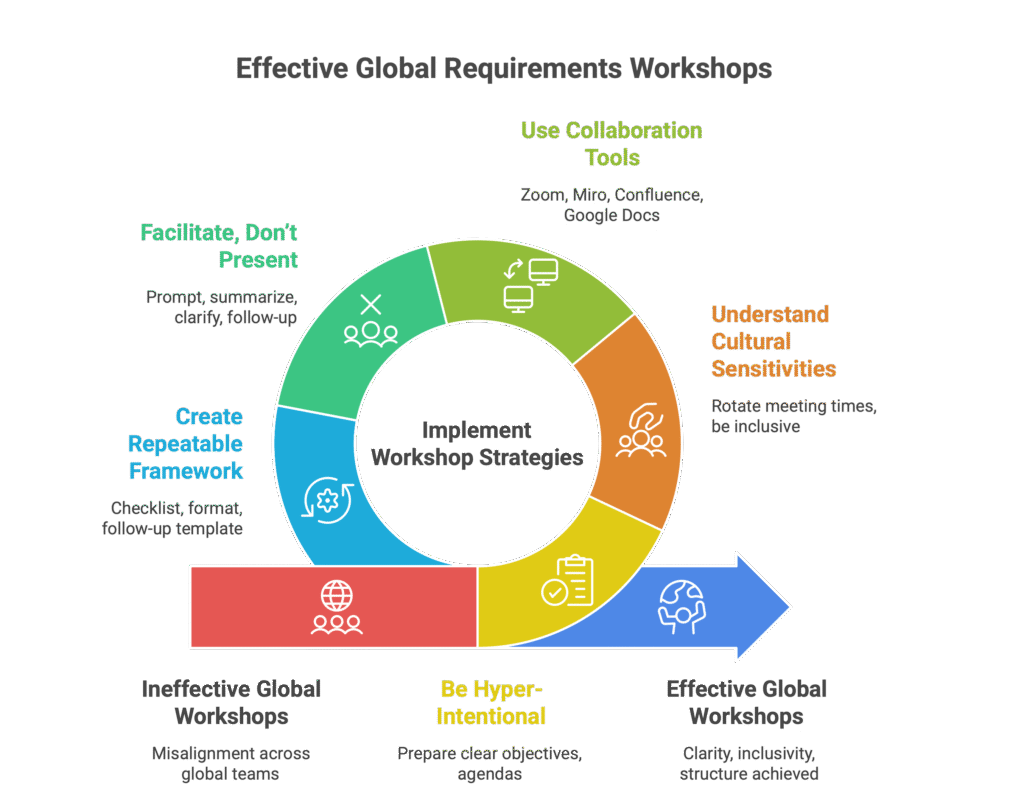
1. Be Hyper-Intentional With Your Preparation
When people are joining a meeting outside their working hours, respect their time. A well-run remote workshop starts with:
Clear objectives shared ahead of time
Structured agendas with time-boxed items
Pre-reads or context documents to reduce in-meeting explanations
Tip: Use a simple template that includes context, goals, participants, and desired outcomes.
2. Understand Cultural and Time-Zone Sensitivities
Facilitating teams across geographies means being mindful of:
Public holidays and regional working hours
Communication styles (some cultures value directness, others prefer diplomacy)
Who speaks up naturally vs. who may need prompting
This awareness builds trust and ensures more inclusive sessions.
Lesson from experience: Always rotate meeting times when working with distributed teams so no one group always bears the inconvenience.
3. Use the Right Collaboration Tools
Over the years, I’ve used everything from Excel and PowerPoint to Miro and Lucidchart—but the best tool is the one your team can use confidently in real-time.
For remote requirements workshops, my go-to setup includes:
Zoom or MS Teams (video conferencing)
Miro or MURAL (visual facilitation)
Confluence (real-time note taking)
Google Docs or Notion (collaborative drafts)
Tip: Always include a digital whiteboard or flow diagram—it boosts clarity and engagement.
4. Facilitate, Don’t Just Present
Great workshops are conversations, not lectures. The facilitator (often the BA) should:
Prompt quiet participants
Summarize what’s been said
Clarify disagreements or contradictions
After the session, follow up with:
A concise summary email
Decisions made + open questions
A deadline for feedback or validation
Over 14 years, I’ve learned that the recap is as important as the meeting itself.
5. Create a Repeatable Framework
Once you’ve found what works, turn it into a reusable process. Mine includes:
A pre-workshop checklist
A standard workshop format (opening, exploration, alignment, recap)
A follow-up template
This ensures consistency—even when the people, tools, or time zones change.
Final Thoughts: Consistency Builds Confidence
Running effective remote workshops isn’t just about logistics—it’s about creating clarity, inclusivity, and structureacross distances. These practices have helped me deliver successful outcomes in healthcare, insurance, and tech projects across the US, UK, Europe, and APAC.
The good news? Once you master cross-time-zone facilitation, it becomes a strategic advantage—not just for project delivery, but for your career growth as a modern Business Analyst.
Have you led or participated in remote workshops across time zones? I’d love to hear what worked for you—or any unique challenges you’ve faced. Feel free to share your thoughts or experiences in the comments!