
When I first started working remotely, I thought the biggest challenge would be time zones or internet connectivity. I was wrong.
The real challenge was learning how to work well without the things we usually rely on—office noise, quick desk conversations, and constant visibility. Remote work didn’t lower the bar. It raised it.
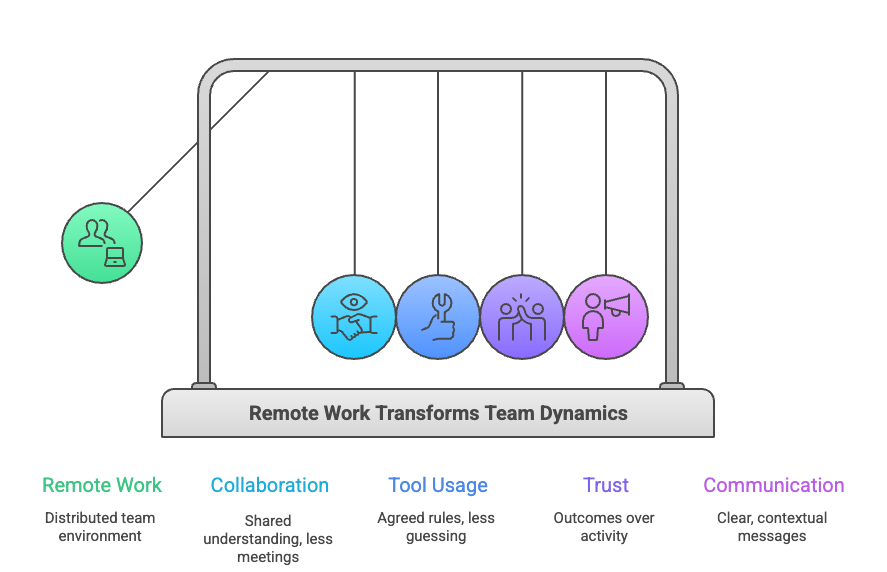
Over time, I learned that remote work isn’t about working from home. It’s about working with clarity, trust, and intention.
The First Lesson: Collaboration Doesn’t Happen by Accident
In an office, collaboration happens naturally. Someone overhears a conversation, jumps in, and suddenly a problem is solved. Remote work removes those moments entirely.
I learned this the hard way during my early weeks on a distributed team. Everyone was busy, everyone was working—but progress felt slow. The issue wasn’t effort. It was alignment.
The turning point came when we started writing things down. Not just tasks, but context—why something mattered, who owned it, and what “done” actually looked like. Collaboration became less about meetings and more about shared understanding.
Good remote collaboration is quiet. When it works, there are fewer interruptions, fewer emergencies, and fewer “just checking in” messages.
Tools Didn’t Fix Our Problems—Habits Did
Like many remote teams, we tried adding tools to solve our challenges. New chat platforms. New project boards. New documentation spaces.
What finally worked wasn’t adding more tools—it was agreeing on how to use them.
Once we defined simple rules—where updates go, when to use chat versus documentation, what requires a meeting—things became smoother. People stopped guessing. Information stopped getting lost.
Remote work rewards teams that treat tools as shared agreements, not personal preferences.
Trust Changed How Productivity Was Measured
One of the most powerful shifts I experienced was the move away from monitoring activity to trusting outcomes.
No one asked how many hours I was online. What mattered was whether the work was moving forward, whether deadlines were met, and whether quality stayed high.
That trust came with responsibility. I became more intentional about planning my day, communicating early, and flagging risks before they became problems. Remote work made accountability visible—without being intrusive.
Productivity stopped being about presence and became about progress.
Communication Became a Skill, Not a Habit
In remote work, unclear communication shows up fast.
I learned to slow down and write messages that included context, not just instructions. A few extra lines explaining whysomething mattered often saved hours of back-and-forth later.
Meetings became shorter and more purposeful. Decisions were summarized and shared. People who couldn’t attend still stayed informed.
Good remote communication isn’t louder—it’s clearer.
When Remote Work Works, It Really Works
Over time, something interesting happened. The team became more focused. Less reactive. More deliberate.
People had space to think. Work quality improved. Collaboration felt respectful rather than rushed.
Remote work, when done right, doesn’t weaken culture—it reveals it. It highlights how teams treat trust, clarity, and accountability when no one is watching.
For Those Considering Remote Work
If you’re exploring remote opportunities, look for teams that:
Document their work
Trust people to manage their time
Value communication over constant meetings
Measure success by outcomes, not activity
These are signs of organizations that understand remote work beyond the surface level.
I’ve been fortunate to work remotely in an environment that genuinely supports this way of working. From time to time, people reach out asking how to find teams like this. When that happens, I usually share a link to roles within the company I worked with—especially when I feel the person would thrive in a remote-first setup.
If you’re someone who values clarity, ownership, and thoughtful collaboration, this path might be worth exploring – Click Here.
Final Thought
Remote work isn’t easier than office work. It’s different. It demands better communication, stronger trust, and more intention.
But when those pieces come together, distance stops being a limitation—and becomes an advantage.