
Remote work is no longer a trend—it’s a way of working that’s here to stay. What started as a necessity has now become a strategic advantage for companies that know how to do it well. Yet, while many organizations allow remote work, not all are truly remote-ready.
From my experience working remotely with distributed teams, I’ve learned that successful remote work is not about sitting at home with a laptop. It’s about clarity, trust, collaboration, and intentional communication. When these elements are in place, remote teams don’t just function—they thrive.
This article breaks down what effective remote work really looks like, in simple terms, from both a professional and human perspective.
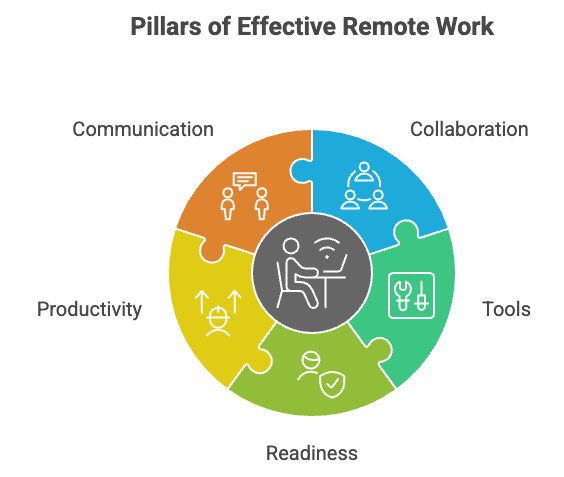
Collaboration: From “Quick Chats” to Clear Systems
In an office, collaboration often happens naturally. You overhear conversations, walk over to a colleague’s desk, or solve issues in quick hallway chats. Remote work removes these moments, which means collaboration must become intentional.
Effective remote collaboration relies on:
Clear ownership of tasks
Well-documented decisions
Shared understanding of goals
Instead of relying on memory or verbal discussions, high-performing remote teams write things down. Project updates, requirements, and decisions live in shared documents or tools where everyone can access them. This reduces confusion, avoids duplicated work, and keeps everyone aligned—regardless of time zone.
The best remote collaborators don’t ask, “Can we jump on a quick call?” for everything. They first ask, “Can this be solved clearly in writing?”
Tools: Supporting Work, Not Controlling It
Remote work runs on tools—but tools alone don’t guarantee productivity. In fact, too many tools can slow teams down.
Strong remote teams use a simple, well-defined tool stack, where each tool has a clear purpose:
One primary tool for communication
One place for documentation
One system to track work and progress
What matters most is not which tools are used, but how consistently they are used. Everyone should know:
Where to share updates
Where to find information
How quickly responses are expected
When tools are used correctly, they reduce meetings, create transparency, and allow people to focus on meaningful work instead of searching for information.
Remote Work Readiness: More Than Just a Laptop
True remote readiness is not technical—it’s cultural.
A remote-ready organization:
Trusts employees to manage their time
Measures success by outcomes, not online presence
Invests in onboarding and documentation
Encourages open, respectful communication
For individuals, readiness means being comfortable with autonomy. Remote professionals take responsibility for their work, communicate proactively, and don’t wait to be monitored. They understand that clarity and accountability replace micromanagement in a remote environment.
This balance of trust and responsibility is what separates effective remote teams from struggling ones.
Productivity: Rethinking What “Efficient” Means
One of the biggest myths about remote work is that productivity is about being constantly available. In reality, remote productivity is about focus and results.
Remote work allows people to:
Reduce unnecessary interruptions
Structure their day around deep work
Deliver higher-quality output
The most efficient remote teams:
Minimize unnecessary meetings
Use asynchronous updates whenever possible
Set clear deadlines and expectations
Respect focus time
Instead of asking, “Are you online?”, successful teams ask, “Is the work moving forward?”
Communication: The Backbone of Remote Success
If collaboration is the engine of remote work, communication is the fuel.
Remote communication works best when it is:
Clear
Respectful
Documented
Context-rich
Because tone and body language are often missing, good remote communicators take extra care to explain why something matters, not just what needs to be done. They summarize decisions, share next steps, and make information accessible to everyone—not just those in the meeting.
This approach builds trust, reduces misunderstandings, and creates a sense of inclusion across teams and locations.
Why Remote Work Is a Win—When Done Right
When remote work is designed thoughtfully, everyone benefits:
Companies access a broader talent pool
Teams become more diverse and inclusive
Employees gain flexibility without sacrificing performance
Work becomes more focused and intentional
Remote work is not about working less—it’s about working smarter.
A Note for Candidates Exploring Remote Opportunities
If you’re considering remote work, look for companies that value clarity, trust, and outcomes over constant supervision. These environments allow professionals to grow, contribute meaningfully, and maintain a healthy work-life balance.
I’ve personally experienced how well-structured remote teams can create both professional growth and stability. For those interested in joining a remote-first organization that truly understands this model, I’ll be sharing a link for candidates who want to explore opportunities with the company I worked with remotely.